Seville Spain Travel Guide 2026: The Complete Insider’s Guide to Andalusia’s Capital
This article contains affiliate links. We may earn a commission at no extra cost to you.
Seville Spain Travel Guide 2026: The Complete Insider’s Guide to Andalusia’s Capital
- 📍 Best time to visit: March–April (Semana Santa) or October–November
- 💰 Budget: €60–€90/day (mid-range, budget travel possible at €40–€60)
- ⏱️ Recommended: 3–5 days (city focus) or 7 days (with day trips)
- 🌡️ Avoid July–August: average 38°C (100°F) and peak tourist crowds
Seville is the kind of city that doesn’t just meet your expectations — honestly, it blows them out of the water in ways you never even thought to anticipate. The Alcázar palace? It’s genuinely more stunning than the Alhambra in some respects, trust me. And the tapas culture here is the real deal, not some performative tourist trap. Flamenco, when you catch it done right, will absolutely make the hair on your arms stand up. I’ve visited Seville three times, most recently in October 2025, and every single time, it delivers more than any other Spanish city I’ve experienced.
Must-See Sights in Seville
Real Alcázar — The Highlight of Seville
The Alcázar truly is Seville’s crown jewel — a 10th-century Moorish palace that Spanish royals continuously modified and expanded for 1,000 years. What you get is a layered architectural masterpiece, and if you’re a Game of Thrones fan, you’ll definitely recognize it (it played the Water Gardens of Dorne). You need to book tickets online weeks in advance; it sells out daily. Go for a morning entry (9am opening) for the best light and thinner crowds. Plan for at least 2–3 hours. Ticket: €13.50.
Seville Cathedral & La Giralda Tower
You’ll find the world’s largest Gothic cathedral here, home to Christopher Columbus’s tomb and the iconic Giralda tower. The tower was originally a Moorish minaret, later converted into a bell tower. Climb the Giralda (it’s a ramp, not stairs, designed for horses back in the day) to snag the best panoramic view of Seville. Ticket: €12, or free on Sundays after 2:30pm (just make sure you arrive by 2pm to get in line).
Barrio de Santa Cruz
The former Jewish quarter is a total labyrinth of narrow, whitewashed alleyways, hidden plazas, and those beautiful orange trees. Honestly, just get lost here on purpose — it’s most atmospheric in the late afternoon when the light turns golden. Most of the tapas bars here are overpriced tourist traps, so check out the food section for where locals actually eat.
Plaza de España
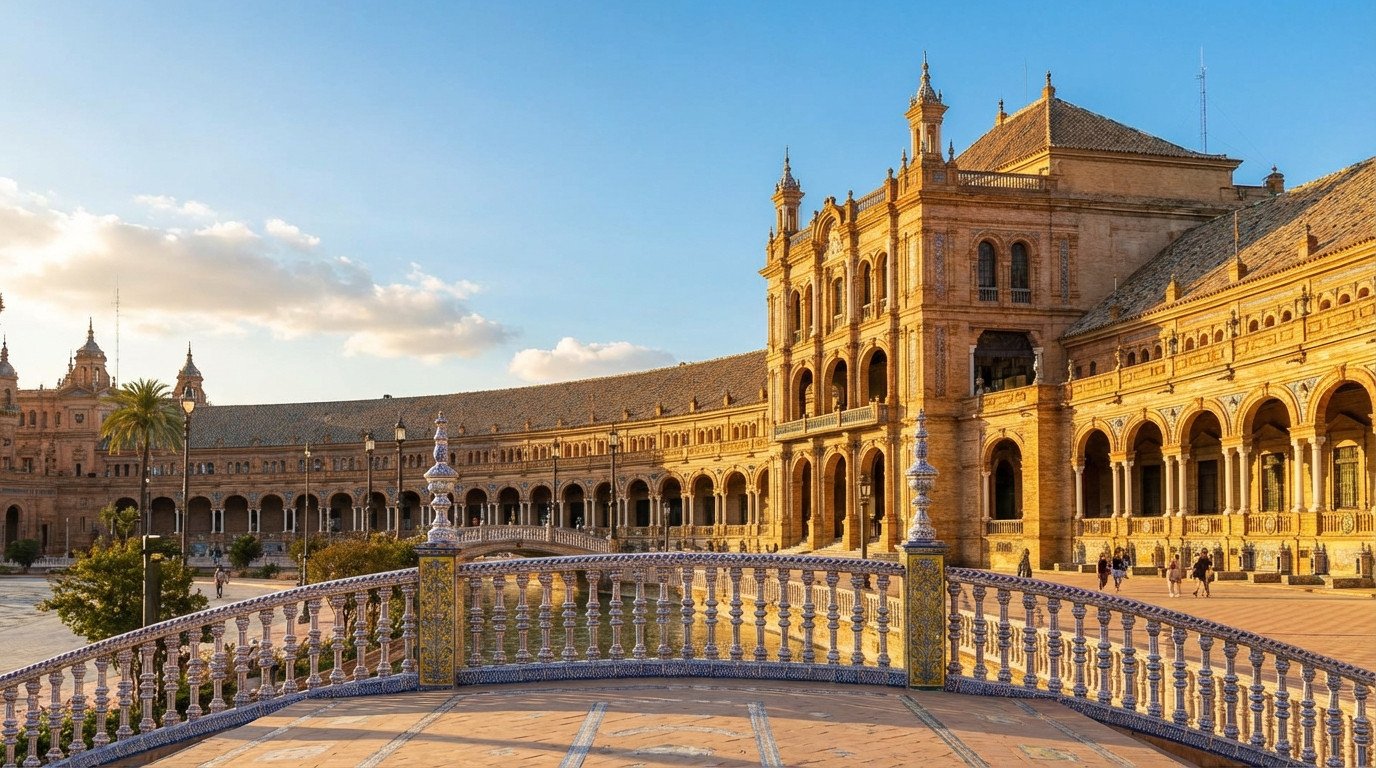
Built for the 1929 Ibero-American Exposition, this semicircular baroque palace, complete with a canal and tiled alcoves for each Spanish province, is absolutely spectacular. It’s free, open-air, and particularly stunning at golden hour. Want a different perspective? Rent a rowboat on the canal (€6 for 35 minutes).
Where to Stay in Seville
The best neighborhoods are Santa Cruz (historic, super walkable, but the most expensive), El Centro (central, good transport links), and Triana (authentic, just across the river, slightly cheaper, and boasts a fantastic food scene).
Budget (€40–€70/night)
Pensiones (small guesthouses) in the Alameda neighborhood offer excellent value — they’re clean, often come with rooftop terraces, and sit in a really lively local area. Oasis Backpackers Palace is the top-rated hostel and offers private rooms, which is a nice perk.
Mid-Range (€80–€150/night)
Hotel Rey Alfonso X in Santa Cruz (€90–€140) is an exceptional value, in my opinion — it’s got a rooftop pool, a great location, and charming Andalusian style. Hotel Simón near the Cathedral (€85–€120) also offers genuine historic character without the inflated prices you’d find in the luxury tier.
Splurge (€180+/night)
Hotel Alfonso XIII sets the benchmark for a Seville luxury experience — it’s a 1928 royal hotel right near the Cathedral, featuring a truly stunning Moorish-Renaissance courtyard. Rates start from €280/night, so you’ll want to book 3–4 months ahead for peak season. If you’re looking for the full Seville splurge, this is it.
Food & Nightlife: Where Locals Actually Go
The Tapas Rule in Seville
Seville boasts its own unique tapas culture, quite distinct from what you’ll find in Barcelona or Madrid. Here, small, free tapas traditionally come with each drink in some bars (especially in Triana and the Alameda). My rule of thumb? Follow local workers at lunch (2–4pm) and steer clear of any restaurant with photos on the menu or a host trying to pull you in from the street. Seriously, just don’t.
Best Areas for Food
- Triana (across the river) — this is where you’ll find the most authentic tapas bars, flamenco roots, a cool ceramics market, and a truly authentic atmosphere at significantly lower prices than Santa Cruz.
- Alameda de Hércules — consider this the local nightlife boulevard. It draws younger crowds and features excellent craft beer bars alongside traditional bodegas.
- Mercado de Triana — a morning market with fantastic produce, jamón, and seafood bars. It’s definitely worth a breakfast visit.
What to Order
- Espinacas con garbanzos — spinach and chickpeas, a Seville signature dish you’ve got to try.
- Pringa — shredded slow-cooked meat montadito (a small sandwich), unique to Seville.
- Pavías — battered cod fritters, best enjoyed at Bar Las Teresas in Santa Cruz.
- Rebujito — fino sherry mixed with lemon soda. It’s the definitive Seville summer drink, super refreshing!
Flamenco
For authentic flamenco, you really should avoid the tourist shows in Santa Cruz; they’re often overpriced (at €35–€50,) and pretty formulaic. Casa de la Memoria (€22) strikes the best balance of authenticity and accessibility. If you want the real deal, Casa Anselma in Triana has no cover charge and performances happen spontaneously — just arrive after 11pm and be prepared to wait. Tablao Flamenco Los Gallos is a reliable choice if you want a guaranteed seat with a glass of wine.
Getting Around Seville
Seville’s historic center is super walkable — you’ll find the main sights within a 20-minute walk of each other. The tram (Line 1) connects the Alameda to the Cathedral and Prado de San Sebastián. For longer trips, Uber and Cabify work reliably and are usually cheaper than taxis.
Cycling here is excellent — Seville boasts 300+ km of protected bike lanes and a city bike-share system (Sevici) available for €13.33/week. The city is flat, which makes cycling genuinely pleasant, trust me.
Budget Breakdown 2026
| Category | Budget (€/day) | Mid-Range (€/day) | Splurge (€/day) |
|---|---|---|---|
| Accommodation | €30–€50 | €80–€130 | €180–€350 |
| Food & Drink | €15–€25 | €30–€50 | €60–€100 |
| Attractions | €10–€20 | €20–€35 | €35–€70 |
| Transport | €5–€10 | €10–€20 | €20–€35 |
| Daily Total | €60–€105 | €140–€235 | €295–€555 |
According to Spain’s National Statistics Institute (INE), Seville welcomed 2.8 million foreign tourists in 2025, with visitors spending an average of €892 each. That makes it Spain’s third most visited city, after Barcelona and Madrid, but with a significantly lower cost of living than either. Pretty good, right? For more information, check out discover Europe destinations.
Avoid These Tourist Traps
- The Cathedral “free Sunday” — honestly, the queue from 2pm onward is a brutal 45–60 minutes long. Just pay the €12 and walk right in without waiting.
- Restaurants in Santa Cruz with laminated menus and street hawkers — you’ll get mediocre food at twice the local price. Seriously, just walk two streets away from the main tourist drag.
- Flamenco shows on the main tourist circuit near the Cathedral — they’re often rehearsed, soulless, and overpriced. Triana is where flamenco has its genuine roots, so head there instead.
- Horse-drawn carriage tours — overpriced (€45–€60 for 45 minutes) and pretty uncomfortable in the summer heat. You can walk the same routes for a fraction of the cost, and it’s much more enjoyable.
Related Spain Guides
Frequently Asked Questions
What is the best time to visit Seville?
March–April is ideal for Semana Santa (Holy Week) and Feria de Abril — these are extraordinary cultural spectacles, but expect things to be booked out years ahead. October–November is the practical sweet spot: 22–26°C, no huge crowds, lower prices, and the city settles back into its authentic pace. Avoid July–August unless you’re genuinely heat-adapted — 38–42°C for weeks on end isn’t exactly a holiday enhancement, in my opinion.
How many days do you need in Seville?
Three days lets you comfortably cover the main sights. Five days gives you the luxury of exploring neighborhoods like Triana at leisure and even adding a day trip to Córdoba or Cádiz. If you’ve got seven days and use Seville as a base, you can really dive into the wider Andalusia circuit, hitting places like Granada, Ronda, Cádiz, and Jerez.
Is Seville safe for tourists?
Generally, it’s very safe. Pickpocketing does happen in tourist areas (especially around the Cathedral and Alcázar), so use a crossbody bag and don’t leave your phone unattended on café tables. Violent crime targeting tourists is extremely rare. And for what it’s worth, the Triana neighborhood, which some older guides might describe as rough, is completely fine for tourists in 2026.
What Spanish should I know before visiting Seville?
Sevillanos really appreciate any attempt at Spanish, even if it’s minimal. Basic phrases like “Por favor” (please), “Gracias” (thank you), “Una caña, por favor” (a small beer, please), “La cuenta” (the bill), and “¿Habla inglés?” (Do you speak English?) go a long way. In tourist areas, most service staff speak English. In local bars and markets, a smile and pointing works universally, you’ll find.
Is Seville expensive compared to other Spanish cities?
Seville is significantly cheaper than both Barcelona and Madrid — particularly when it comes to accommodation, food, and nightlife. A mid-range dinner for two (wine included) will run you about €40–€60, versus €70–€100 in Barcelona. Budget travelers can actually eat exceptionally well in Seville on €15–€20/day by simply following locals to their lunch restaurants and tapas bars.